To address the persistent maintenance challenges associated with 360° touchless automatic car wash systems, a new, optimized maintenance solution has been introduced. By incorporating solid lubrication technology, this solution effectively overcomes common industry pain points—such as traditional grease being washed away by high-pressure water, emulsifying when exposed to acidic or alkaline cleaning agents, or trapping dirt and grit that accelerate mechanical wear. This approach extends maintenance intervals, lowers labor costs for upkeep, and improves equipment uptime.
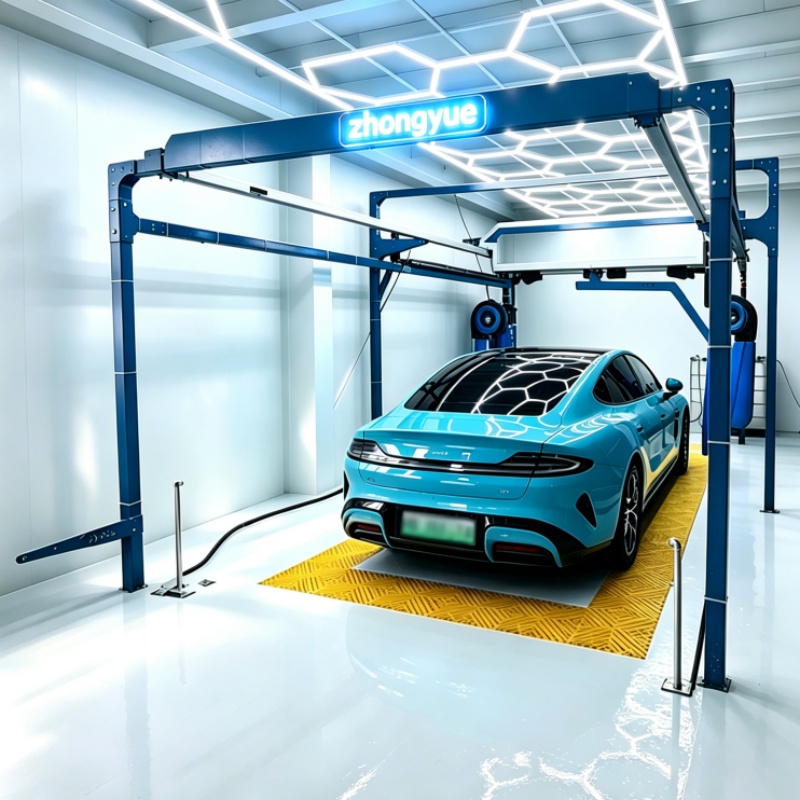
360° touchless car wash systems utilize a robotic arm that follows the vehicle’s contours, employing high-pressure water jets for a complete clean. These systems are frequently deployed in 24-hour unattended locations, such as gas stations, parking lots, and commercial hubs. The equipment operates in harsh conditions characterized by high humidity, high-pressure spraying, exposure to corrosive chemical agents, and the constant presence of dirt and debris. Conventional lubrication methods—typically relying on standard grease—are highly susceptible to being washed away by high-pressure water. This often leads to the formation of sludge, which accelerates the wear of bearings, pins, and guide rails. Consequently, maintenance personnel must frequently visit the site to re-apply grease and clean components; failure to perform timely maintenance can result in robotic arm jams, abnormal noises, or total system downtime, directly impacting revenue.
The core innovation of this optimized solution lies in the application of tailored solid lubrication configurations for specific components. For low-speed rotating points—such as the bearings in the rotating robotic arm or the spray nozzle assembly—pre-filled solid-lubricant bearings are used. The lubricant is locked within a polymer matrix, making it resistant to water washout and mild acids or alkalis; once installed, these components require no additional lubrication for six months to two years. For exposed sliding surfaces—including linear guide rails, sliders, chains, and rod-end bearings (spherical joints)—a dry-film solid lubricant coating (based on molybdenum disulfide or PTFE) is applied. This creates a dry, non-sticky surface that prevents dirt and grit from adhering, thereby avoiding the “grinding” effect caused by grease trapping debris. This extends the lubrication interval to 1–3 months, significantly reducing the frequency of manual maintenance. Technical experts caution that solid-state lubrication is intended to reduce—not eliminate—the need for maintenance, and it comes with specific operational limitations. Components such as speed reducers and gearboxes still require fluid lubricants for heat dissipation, while high-pressure pumps, water seals, nozzles, photoelectric sensors, electrical control box seals, and filtration systems must continue to undergo routine inspections and maintenance according to established schedules. Solid-state lubrication cannot replace the inspection of seals; if seals age and allow sand or water to enter, bearing damage will still occur. At sites with high vehicle throughput, periodic disassembly remains necessary to check clearances and the condition of seals.
Feedback from several pilot sites indicates that upgrading to a solid-state lubrication system reduces lubrication-related maintenance tasks by over 60% and significantly decreases unplanned equipment downtime. This solution is particularly well-suited for unmanned car wash operations—including those involving exports, geographically dispersed locations, or sites with limited on-site personnel.
Industry insiders note that competition in the 360-degree touchless car wash sector is shifting from a focus solely on cleaning performance toward long-term operational stability and maintenance cost-efficiency. Targeted lubrication upgrades, such as the implementation of solid-state lubrication, offer a cost-effective way to enhance equipment durability. Moving forward, this is expected to become a standard feature for high-end export models and high-traffic car wash sites. Equipment manufacturers are also continuing to refine their standardized maintenance manuals, providing both domestic and international clients with clear guidance on lubrication points, replacement intervals, and operational protocols to ensure the stable, long-term performance of intelligent car wash systems.
Post time: Oct-17-2026